
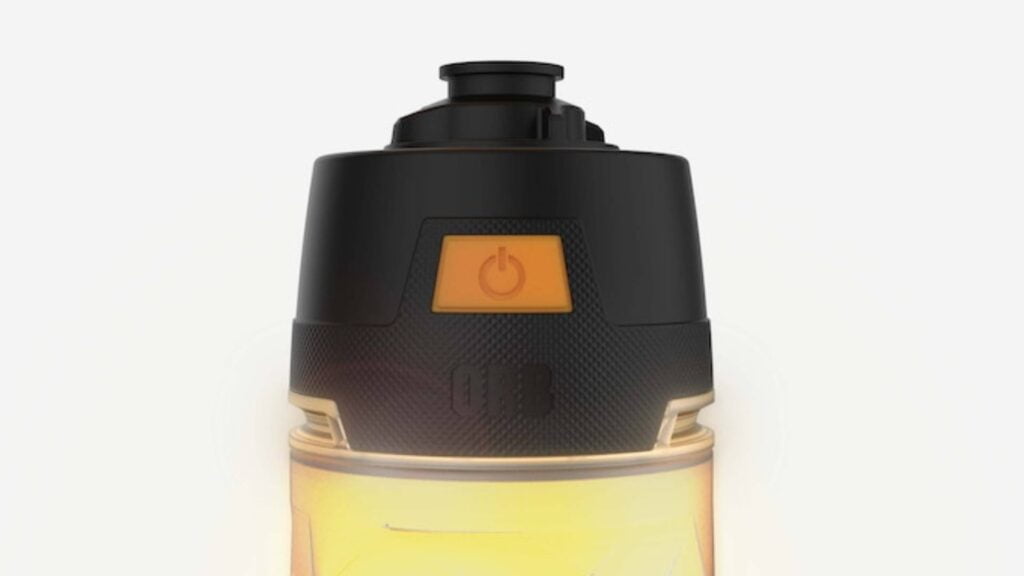
New year, new lights!
Thank you all so much for your support, we reached our funding goal around 24 hours ahead of target and never looked back. It’s a very obvious statement, but we couldn’t have done it without everyone who backed the project!
Now the hard work starts, we have to finalise the design and get everything ready for manufacture. This isn’t our first rodeo, so we’ll be working hard to avoid all of the normal manufacturing bear traps, but there will doubtless still be setbacks along the way.
We will do our best to keep all the backers informed of progress between now and delivery, but please feel free to get in touch with us at any point and with any questions you like.
Happy New Year to you all, and I hope you have a great start to 2023!
Andrew and the Orb Team
The writing feels friendly and informative without losing any important detail. It would be interesting to hear your thoughts on how this might change over time.
Przed rejestracja dobrze jest sprawdzic warunki w dziale pieniadze za rejestracje.
Thanks, I’ve been looking for this for a long time
_________________
Whale
Keep up the great work.
I stumbled onto this blog while looking for a clearer explanation of the subject. A short checklist at the end might make these suggestions even easier to use.
I am sorting a folder of generated song drafts that accumulated over several months. A few titles appear on several exports, with filenames that do not explain the differences. My first step is preserving the originals and recording the purpose of every proposed revision. A phrase I used in my search was remove suno artifacts but those words alone cannot show whether a revised recording sounds better. Would you use separate folders, a filename suffix, or a small spreadsheet to track those decisions? I also need a way to distinguish a format conversion from a change made to the audio itself. For each file I can record the export date, source version, format, and reason for keeping it. I would rather maintain a small useful record than a complicated system I stop updating. Please share a naming example that would still make sense when reopening the folder next year.
Golden soft candlelight brushed that naked flesh as woman stretched lying fully slowly upon smooth soft bedding linen, the deep look lingering toward viewer by a soft, intense grin.Girl glided a fine pad over smooth contour across the form, and deeper, playing that sheer rim along that light strap before thin lone string fell out bare arm.The gentle sigh left soft open form and girl pictured the gentle touch supplanting its path, searching all delicate with tender spot.Curving her shape, woman presented full generous shape of soft curves, her buds reacting by the force from the stare merely.Carefully the spread soft thighs, displaying the warmth already now pulsed from want before the stroke.Her light touch moved through the, tracing deliberate, playful motions though girl whispered one sound in soft quiet whisper!“Come nearer,” she murmured, soft speech heavy in want — presently time each inch within her belongs toward him.”
How to Spot a Male Enhancement Scam Product
Does anyone have a sensible workflow for preparing a generated track as a continuous exhibition loop? The first requirement is that the ending should return cleanly to the opening. I want to treat that boundary separately from any distracting texture elsewhere in the track. I bookmarked remove suno artifacts while gathering possible references for the second question. Before choosing any processing, I would mark candidate loop points and listen through several repetitions. I also need to test the exhibition player, since its handling of repetition could affect the transition. Only after that would I decide whether an internal texture deserves a separate experiment. I would keep the original beside each trial version to compare the overall musical character. The final check would use the actual speakers and the expected exhibition playback level. Are there practical loop-preparation checks that are easy to overlook in a small exhibition?
I need an ambient cue to repeat while a player explores a small room. The seam becomes distracting when I listen through several consecutive cycles. I am unsure whether the problem is the edit or a texture near the ending. My initial test would change only the crossfade length at the boundary. I would keep the level and all other edits identical between versions. There is no dramatic change in the room at the repeat point, so the music should not imply one. I would listen to several cycles in context, then inspect the boundary separately, keeping notes about exactly when the interruption becomes apparent. A page about remove suno artifacts came up during my search for another possible check. I have not tried the approach and would not assume it solves a seam. A continuous mood matters more here than making every isolated moment polished. What diagnostic order would help separate editing choices from source texture?
You’re so awesome! I don’t believe I have read a single thing like that before. So great to find someone with some original thoughts on this topic. Really.. thank you for starting this up. This website is something that is needed on the internet, someone with a little originality!
This is my first time pay a quick visit at here and i am really happy to read everthing at one place
узнать больше Новофон вход
La scrittura di Valérie Perrin è come un balsamo: lenisce le ferite e rasserena lo spirito. La storia di Violette è drammatica ma piena di luce. I personaggi sono vivi, reali, imperfetti. È impossibile non affezionarsi a loro. Per chi ama la lettura digitale, questo libro è un tesoro da custodire nel proprio dispositivo. Cercando “Cambiare l’acqua ai fiori pdf” potrete accedere a un mondo di emozioni autentiche. È una lettura che vi cambierà, proprio come cambia l’acqua ai fiori. https://cambiarelacquaaifioripdf.site/ Valérie Perrin Biografia
I’m so excited to see this come to fruition. The new design looks to be a great improvement on the Orb Mk1.